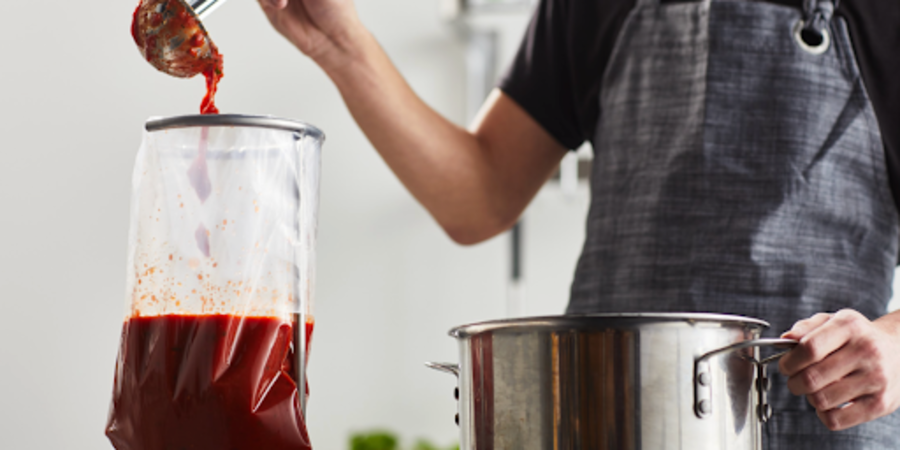
Cook-Chill Is a System Built Around Protection
Cook-chill isn’t complicated in theory. Batch-cook large quantities, chill rapidly, store under controlled temperatures, reheat to order. What makes it challenging is execution, specifically keeping every stage of that chain consistent across shifts, locations, and product lines.
Done right, it cuts labor and gives your team control over when the heavy lifting happens. Production moves to off-peak hours. Service becomes more predictable. The kitchen runs smoother.
But here’s what gets underestimated: cook-chill is a protection system as much as a production method. Every step is designed to keep food safe, consistent, and ready to perform. And every step depends on the one before it holding up. The bag is what carries food through chilling, holds it through storage, and delivers it intact through reheating. Most operators treat that as a procurement detail. It isn’t.
What a Cook-Chill Program Is Actually Doing
The logic of cook-chill is straightforward. Cook in large batches, move food through the temperature danger zone quickly via rapid chilling, hold in controlled cold storage, reheat to order in a water bath. The system extends product life, locks in portion control, and eliminates the labor that would otherwise go into cooking everything fresh.
What varies is the operational context.
For multi-unit restaurants, cook-chill means managing consistency and labor from a centralized production point across locations that may never see the same kitchen team twice. For healthcare and institutional foodservice, it means food cooked in a central kitchen has to arrive at multiple distribution points with its quality and safety intact, every time. For commissary operations, it means producing at scale and pulling product as demand requires, sometimes across extended cold storage.
The system works because each stage protects what the previous stage produced. That’s the frame worth keeping in mind when you evaluate any component of it, including the bag.
Why Packaging Is a Critical Control Point
In HACCP terms, a critical control point is any step where a failure directly impacts food safety or product quality. Every facility operates under its own approved HACCP plan, with control points established in coordination with their health inspector. Most operators go straight to cooking temperatures, cooling rates, storage protocols.
Packaging belongs on that list. Few treat it that way.
When you hot-fill a bag, food comes straight from high-heat production. The bag has to handle that fill temperature without failing. Then hold a tight seal through rapid chilling. Then maintain integrity across cold storage. Then perform again during controlled reheating in a water bath.
Four distinct stress points. One bag.
Each stage puts different demands on the material. The fill stage tests structural durability under heat. Chilling tests seal integrity under pressure and temperature change. Storage tests long-term resistance. Reheating tests whether the bag holds together under controlled heat without breaking down. A bag built for this specific sequence protects the food at every stage. That’s not incidental. It’s the whole point.
What the Right Packaging Delivers at Each Stage
From Kettle to Bag: Hot-Fill Performance
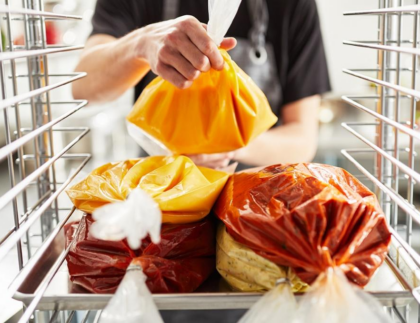
The fill stage is where the process starts and where the first real demands on packaging show up. Product coming off large-batch production is hot. Soups, sauces, bases, prepared foods go straight from the cook tank into the bag.
The bag has to hold. No deforming, no seal stress, no structural weakness before the food even reaches the blast chiller. A bag with durable construction handles that fill cleanly, which means the seal goes into chilling already intact and the product inside is protected from the moment it leaves production.
That first stage sets the tone for everything that follows.
Through the Blast Chiller: Seal Integrity Under Pressure
Rapid chilling moves food safely through the temperature danger zone. It’s also where the bag faces its second test. Temperature drops fast, product contracts, and the seal has to hold through all of it without giving.
A strong, consistent seal keeps the product contained and uncontaminated through the full chilling cycle. Portion control starts here too. A bag filled to the right volume and sealed cleanly gives you a predictable unit going into storage, which makes inventory management and FIFO rotation far more reliable downstream.
In Cold Storage: Reliability Over Time
Cook-chill is designed to support extended cold storage under proper refrigeration and temperature control. That window is what makes large-batch production financially worthwhile. Cook once, store intelligently, pull as demand requires.
What that window depends on is a bag that doesn’t fail over time. BPA-free, food-grade construction that holds its seal through extended refrigeration keeps the product protected and the inventory predictable. For operations managing multiple product lines in cold storage, consistency across every bag, every batch, is what allows HACCP documentation and rotation systems to function reliably.
A legible, durable labeling surface isn’t a minor detail here. It’s what connects cold storage to compliance.
At Reheating: Performance Where It Counts
Cook-chill bags are not cooking bags. Worth being precise about that.
They’re designed for hot-fill and chill processes, and for controlled reheating in water baths. The goal at reheating is to bring food to serving temperature without cooking it further. The bag needs to hold its seal and structure under that controlled heat, not just initially, but through the full reheat cycle.
For multi-unit operations that reheat centrally produced food across locations, or for healthcare kitchens moving food from a central facility to distribution points, that performance at the final stage is where production quality either arrives at service or doesn’t.
PanSaver Cook-Chill Bags Built for Demanding Foodservice Environments
PanSaver cook-chill bags are designed for commercial kitchens running high-volume batch production. Not general-purpose storage. Not a workaround.
Built specifically around what a cook-chill workflow demands, from hot-fill to cold storage to controlled reheating.
What they’re designed to handle:
- Hot-fill from large-batch production of soups, sauces, bases, and prepared foods
- Strong seals maintained through rapid chilling and extended cold storage
- Controlled reheating in water baths without seal failure or structural breakdown
- Consistent portioning across batches in high-volume kitchens
- Compatibility with standard heat sealers used in commercial operations
BPA-free, food-grade materials. Durable construction that holds up through chilling cycles and extended cold storage without compromising the seal or what’s inside.
For operations running multiple product lines through a cook-chill system, that consistency, batch after batch, day after day, is what the program actually runs on.
What to Think Through When Evaluating Bags for Your System
Not every cook-chill setup runs the same. Volume, product types, storage duration, and reheating methods all vary. The evaluation questions, though, stay consistent.
Fill temperature compatibility: Hot soups and sauces stress a bag at the fill stage in ways that cooler products don’t. Confirm the bag is built for the temperatures you’re actually working with, not rated for a general range that may not reflect your product line.
Seal reliability: Test bags with your heat sealer before committing to volume. A seal that fails at scale is a problem you could have caught in a single test run.
Size and fill volume: Match the bag to your actual portion size. Using the closest available option introduces inconsistency at the first stage of the process.
Sealer compatibility: Not all bags work with all heat sealers. This is worth a conversation before you order at scale, not after.
Storage duration: A 28-day program requires bags rated for it. Long-term performance varies more than most suppliers lead with.
Labeling surface: FIFO rotation and HACCP documentation depend on labels that stay readable through chilling and weeks of cold storage. If the surface doesn’t support that, it creates a compliance gap that has nothing to do with the food itself.
Cook-Chill Works When Every Part of the System Does
A cook-chill program is a chain. Blast chillers, cooling curves, staff training, temperature protocols. That investment pays off when every link holds.
The bag is one of those links. Not a supply closet decision. A production decision that determines whether food cooked in the morning arrives at service, sometimes days later, with its quality, consistency, and portion integrity intact.
The right bag protects at hot-fill. Holds through rapid chilling. Maintains integrity across cold storage. Performs during reheating. That’s the sequence the system depends on, and the bag is present at every stage of it.
For centralized operations delivering to multiple locations, that reliability is what makes consistency possible across every distribution point, not just in the kitchen where the food was made. For high-volume kitchens managing multiple product lines, it’s what keeps batch production predictable over time.
PanSaver cook-chill bags support the full workflow from hot-fill through rapid chilling, cold storage, and controlled reheating in water baths. BPA-free, food-grade, built for the demands of high-volume kitchens.
The system is designed to protect food from cook to chill to service. The bag is a big part of how that actually happens.
If your cook-chill program is running well but not quite where you want it, the bag is worth a closer look before you adjust anything else. It’s a small decision with a long reach.
Request a sample and test it against your current setup. Browse PanSaver cook-chill products, or contact us to talk through what fits your operation.