The USDA is clear on this: bacteria that cause foodborne illness multiply fastest between 40°F and 140°F, and they can double in number in as little as 20 minutes. When outdoor temperatures climb above 90°F, the safe holding window for perishable food drops from two hours to just one. That is not a generous timeline when you are running a buffet, loading a catering van, or holding pans through staggered lunch periods.
Most operators already know the basics of time-temperature control. But summer has a way of exposing the gaps between knowing the rules and keeping up with them during a full-volume shift. The good news is that a few practical adjustments, including how you manage your pans, can make a real difference in food quality, cleanup speed, and day-to-day consistency when the pressure is highest.
Why Summer Raises the Stakes for Every Kitchen
Heat does not just affect the food. It affects the entire operation.
Walk-in coolers work harder when kitchen temperatures rise, and every time that door opens during a rush, internal temps climb. Steam tables that hold food at safe temperatures all winter may struggle to keep up when ambient kitchen heat pushes past 100°F near the line. Pans of food sitting on a pass or waiting for transport to a catering site are losing their temperature buffer faster than they would in cooler months.
Then there is the volume problem. Summer often means more covers, more catering, more off-premise events, and more food moving through the kitchen in a shorter window. For school nutrition programs running summer meal programs, that can mean serving hundreds of students across extended hours with a smaller team. For a restaurant, it means longer holding times on the steam table during a patio rush that stretches well past normal dinner service.
Staff pressure compounds everything. Summer often brings seasonal hires who are still learning the workflow. Experienced team members are covering more ground. Cleanup at the end of a long, hot shift is the last thing anyone wants to spend extra time on, but that is exactly when corners tend to get cut.
All of these factors push back on food safety and food quality at the same time. The question is not whether your team knows the protocols. It is whether your tools and workflows make it realistic to follow them when things get busy.
Food Safety Is Also About How You Hold, Protect, and Move the Food
Most food safety training focuses on cooking temperatures, handwashing, cross-contamination, and cooling procedures. Those are critical. But there is another layer that gets less attention: how food is held, protected, and served once it has been cooked.
A pan of macaroni and cheese that was cooked to the right internal temperature can still lose quality and drift toward the danger zone if it is held too long in an uncovered pan, allowed to dry out on a steam table, or transported without proper insulation. The USDA’s guidance to keep hot food at or above 140°F applies not just at the moment of cooking, but through the entire holding and service window.
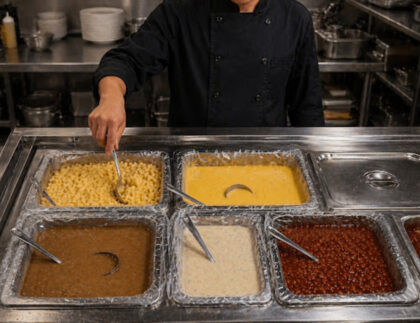
This is where pan management matters more than most operators realize. A clean, properly lined pan does more than make cleanup easier. It helps maintain a barrier between the food and the hot metal surface, which reduces scorching and moisture loss. Food that stays moist holds temperature more consistently. Food that does not stick to the pan is easier to portion cleanly, which reduces waste. And when the pan is spent, a quick liner swap gets a fresh setup back on the line faster than scrubbing and re-prepping a bare pan.
None of this replaces proper HACCP protocols or temperature monitoring. But it supports them. When the tools in your kitchen make it easier to hold food at the right temperature, turn pans over quickly, and keep the line moving, your team has a better chance of staying on top of food safety during the shifts that matter most.
How PanSaver Pan Liners Earn Their Place During Peak Season
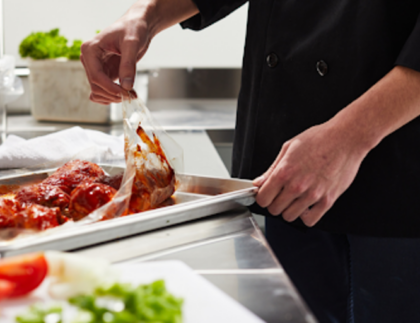
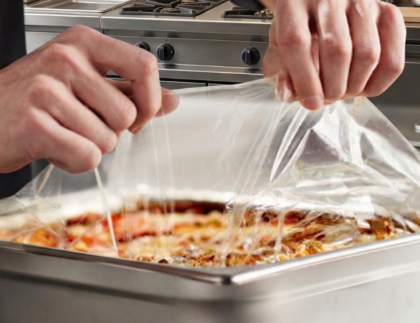
PanSaver nylonPan Liners are built for high-temperature performance, oven-safe to 400°F, with a Contour-Fit® construction that fits tight to the pan so food does not get trapped in corners. They are a simple product. Line the pan, cook or hold the food, then pull the liner and toss it. No soaking, no scrubbing, no fighting with baked-on residue at the end of a double.
That simplicity is exactly what makes them useful during summer, when every minute and every pan counts.
Faster Cleanup, Less End-of-Shift Drag
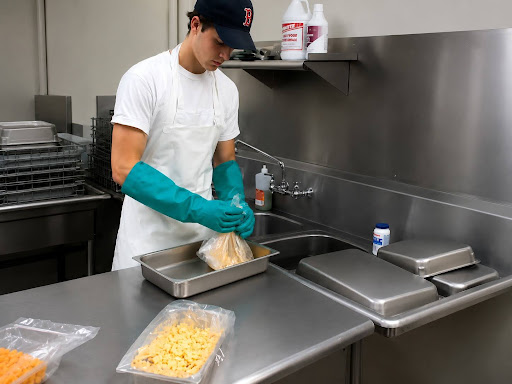
The most immediate benefit is labor. When you pull a liner out of a hotel pan at the end of service, the pan underneath is clean. No scrubbing. No soaking overnight. No chemical soak cycles. Just sanitize the pan and move on. Changing a liner takes less than a minute, which means your team can turn pans faster during service and get out of the kitchen sooner at the end of the night.
For a commissary kitchen prepping ahead for a week of catering events, that cleanup time adds up fast. For a concession stand running back-to-back shifts during a tournament, it is the difference between keeping up with demand and falling behind. A pan liner costs pennies. Paying someone to scrub that same pan costs dollars.
Better Food Quality Through Longer Holds
Because PanSaver liners create a barrier between the food and the hot metal pan surface, food does not scorch or dry out as quickly. Research conducted at the Restaurant School at Walnut Hill College found that food held on lined pans is 20°F warmer on average compared to food in unlined pans. That means better moisture retention, better flavor, and more consistent quality across longer holding windows.
During summer, when holding times tend to stretch, that performance difference becomes more noticeable. A school cafeteria holding pans of chicken through three staggered lunch periods will see a real difference in the quality of food served during the last rotation. A catering team transporting hotel pans in a hot van to an outdoor event will find that food arrives in better condition when it has been held in a lined pan.
More Consistent Service, Pan After Pan
Consistency is one of the quiet benefits of lining your pans. Every pan starts with a clean, uniform surface. Food releases cleanly for portioning. There is less waste stuck to the bottom and sides of the pan, which means more usable servings per batch. For operations tracking food cost closely, that matters.
It also simplifies workflow for seasonal staff. There is no training curve with a pan liner. Line it, use it, toss it. Most kitchens see adoption on day one. When you are onboarding new team members in the middle of your busiest season, that kind of simplicity is worth something.
Meeting Sustainability Goals Without Giving Up Performance
More operators are being asked about sustainability, whether by procurement teams, school district policies, or their own corporate commitments. The challenge is finding products that support those goals without creating problems on the line.
PanSaver offers two options built specifically for this.
PanSaver ECO pan liners use up to 25% bio-based content derived from rapeseed oil. They deliver the same tear resistance and easy food release that operators expect from standard PanSaver liners, with a lower reliance on petroleum-based materials.
PanSaver RC pan liners are made with a minimum of 80% post-consumer recycled content. They are oven-safe to 400°F, puncture-resistant, and built with the same Contour-Fit® construction as the standard line. PanSaver RC helps divert plastic waste from landfills and uses 80% less virgin material, without sacrificing the durability that busy kitchens depend on.
Both products are manufactured in the USA by M&Q Packaging. Neither requires a change in how your team works. If you are already using PanSaver liners, switching to ECO or RC is a one-for-one swap. If sustainability is a reporting requirement for your operation, these products give you a credible, documented option that does not ask your kitchen to compromise on performance.
A Summer Service Readiness Checklist for Foodservice Teams
Here are practical steps to tighten up your operation before peak-season volume hits.
Prep and production. Build your prep schedule around realistic holding windows, not best-case scenarios. Cook in smaller batches when possible so food spends less cumulative time in the danger zone.
Pan setup. Line hotel pans before service starts. Having pre-lined pans ready to go means faster swaps on the line and less scrambling during a rush.
Temperature monitoring. Check and log steam table and holding cabinet temps at the start of every shift and at regular intervals during service. Do not assume equipment is holding where it should, especially in a hot kitchen.
Holding discipline. Label pans with cook time or hold-by time. Train staff to rotate food on the steam table and discard anything that has exceeded safe holding windows. The USDA’s guidance is clear: when in doubt, throw it out.
Transport and off-premise service. Use insulated carriers and check food temperatures immediately on arrival. If food has dropped below 140°F, it needs to be reheated to 165°F before service, per USDA recommendations.
End-of-shift cleanup. Pull liners, wipe down pans, reset for the next day. The faster your team can break down the line, the better their turnaround, and the more likely they are to follow proper sanitation steps instead of cutting corners when they are tired.
Staff communication. Brief your team on summer-specific risks at the start of the season. Keep it short and practical. Post reminders near the steam table and in the prep area.
Small Choices Add Up When the Heat Is On
Summer will always be demanding. The volume, the heat, the longer hours, and the food safety pressure are not going away. But the operators who get through peak season with the fewest problems are usually the ones who pay attention to the small, practical details that keep things running smoothly.
Lining your pans is one of those details. It saves labor at cleanup. It helps protect food quality through longer holds. It supports faster pan turnover during high-volume service. And it gives your team one less thing to worry about at the end of a long, hot shift.
Labor saver, time saver, money saver. That is the idea behind PanSaver, and it is exactly what your kitchen needs when summer turns up the pressure.
Browse PanSaver Pan Liners, PanSaver ECO, and PanSaver RC at pansaver.com, or request a sample to see the difference for yourself.