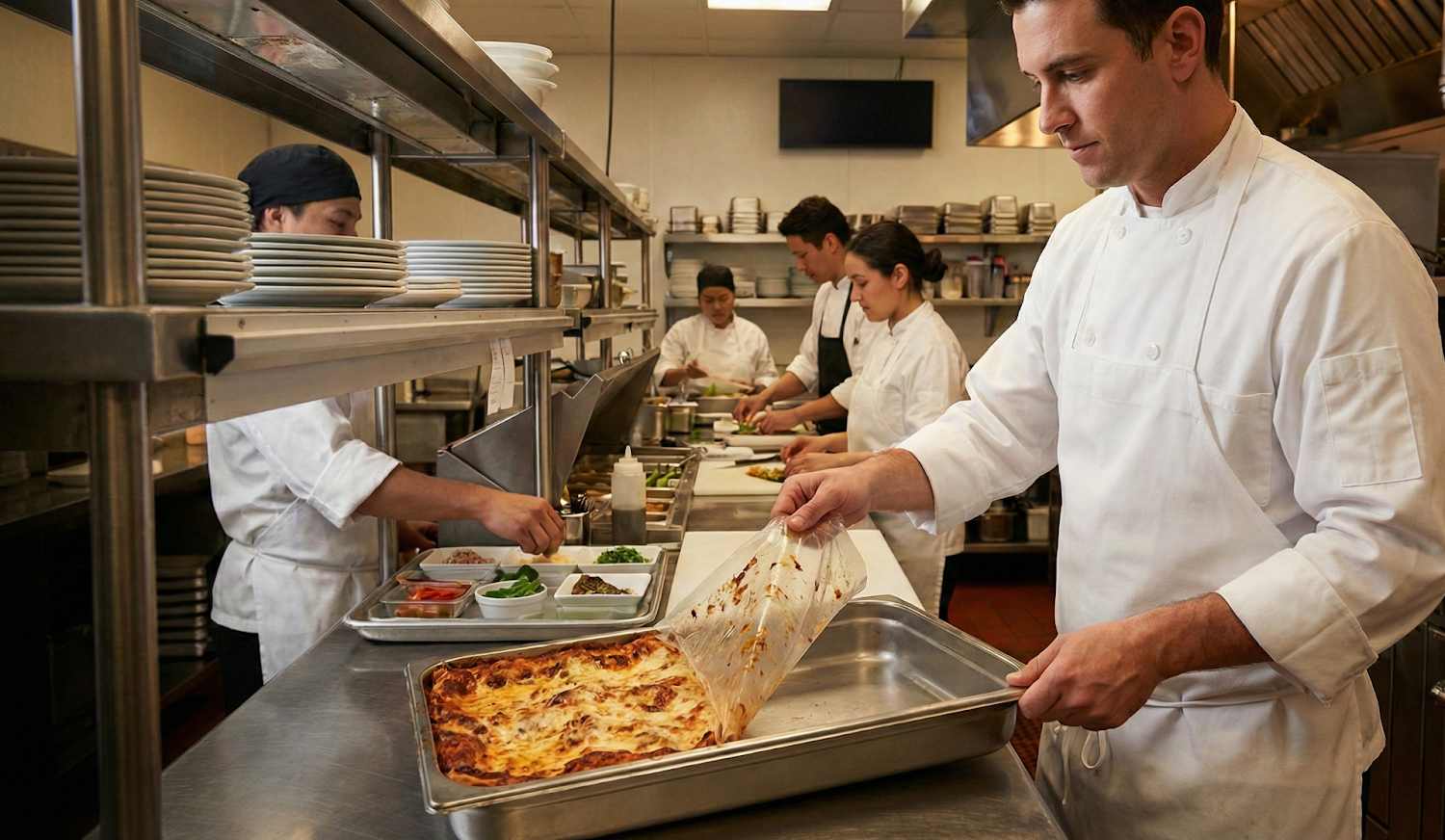
The staffing gap in foodservice isn’t going away anytime soon. Industry data shows that 59% of restaurant operators still struggle to fill positions, with back-of-house roles being the hardest to staff. Turnover in the industry remains above 70% annually. For school nutrition directors managing multiple sites, the challenge multiplies. For hospital cafeteria managers juggling patient meals and staff feeding, every absence creates a cascade of problems.
These numbers mean something concrete for the people running kitchens: you’re operating with fewer hands, tighter schedules, and less margin for inefficiency.
The good news? There are practical ways to stretch your team’s capacity without burning them out. It comes down to identifying where time gets wasted and eliminating unnecessary steps wherever possible.
Where Kitchen Time Actually Goes
Before you can improve efficiency, you need to understand where the hours disappear. In most operations, labor time breaks down into three main buckets: prep, service, and cleanup.
Prep and service are where your skill and creativity live. Cleanup is just as essential but it can also be one of the most time-consuming parts of the day if processes or tools are inefficient. .
End-of-shift scrubbing is often a significant, but overlooked, labor demand in foodservice. After a long day of cooking and serving, staff still need to wash pans thoroughly and remove baked-on residue to meet sanitation standards. When cleanup takes longer than expected, it can lead to overtime hours or pull employees away from other important tasks.
Consider the typical scenario: a hotel pan with baked-on lasagna or dried cheese sauce. That pan doesn’t just need a rinse. It needs soaking, scrubbing, possibly a second round of scrubbing, and then sanitizing. Multiply that by the number of pans coming through your dish station after a busy service, and you start to see where the hours go.
The problem compounds during high-volume periods. Holiday rushes, back-to-school season, game days: the times when you need your team focused on output are exactly when cleanup demands spike. And when you’re already short-staffed, that cleanup burden falls on fewer shoulders.
Practical Strategies for Doing More With Less
Improving labor efficiency doesn’t require a complete overhaul of your operation. Small, targeted changes add up to significant time savings over weeks and months. The key is identifying which changes will have the biggest impact in your specific environment.
Simplify Your Menu
Every item on your menu has a labor cost attached to it. Complex dishes with many components require more prep time, more cooking steps, and more cleanup. During staffing crunches, consider streamlining your offerings to focus on dishes that can be executed consistently with fewer hands.
This doesn’t mean sacrificing quality. It means being strategic about complexity. A well-executed simple menu beats a sloppy complicated one every time. Look at your sales data: which items sell well and are easy to execute? Which items require disproportionate labor for their contribution to revenue? The answers often point toward smart simplification opportunities.
Cross-Train Your Staff
When you’re running lean, flexibility matters. Staff who can move between stations, cover for absences, and handle multiple roles keep your operation running smoothly even when you’re short-handed.
Cross-training takes time upfront but pays dividends during crunch periods. Start with your most reliable team members and build out from there. The goal isn’t to make everyone an expert at everything. It’s to ensure that no single absence can cripple your operation.
Document your processes as you train. Simple checklists and station guides help new or cross-trained staff get up to speed faster and reduce errors during transitions.
Batch and Prep Ahead
Cook-chill systems and batch preparation allow you to shift labor from peak service hours to slower periods. Preparing components in advance means less scrambling during rushes and more consistent output.
This approach also reduces waste. Pre-portioned items help maintain consistent serving sizes, minimize excess prep, and keep food and labor costs more predictable throughout storage and service. For operations serving large volumes, like school cafeterias or hospital kitchens, batch preparation is often the difference between manageable service and chaos.
The key is building prep schedules that align with your actual demand patterns. Track what you use and when, then build your prep calendar around that data rather than guesswork.
Reduce Cleanup Time Without Cutting Corners
Here’s where small changes make a big difference. Every minute saved on cleanup is a minute available for prep, service, or simply getting your team home at a reasonable hour.
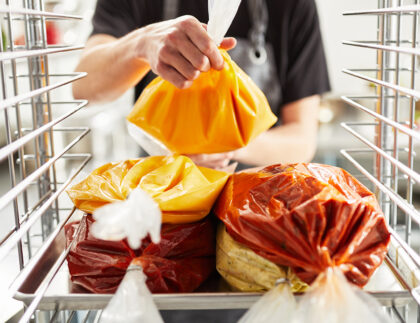
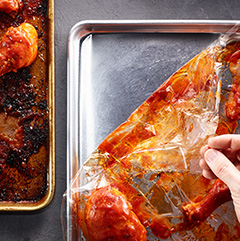
PanSaver Pan Liners are designed specifically for this purpose. Line your pan, cook or hold your food, then remove the liner and toss it. No scrubbing. No soaking. No attacking baked-on residue with steel wool.
The time savings are real: a few minutes per pan, multiplied across dozens of pans per shift, adds up to hours reclaimed each week. Your dish crew will thank you at the end of a double.
Beyond the labor savings, pan liners improve food quality during holding. Food held on a lined pan stays about 20°F warmer on average and retains moisture longer. That means better food reaching your customers and less waste from dried-out product that has to be thrown away. The Contour-Fit design keeps food from getting trapped in corners, so you get more servings out of every batch.
For operations already stretched thin, this kind of simple swap makes an immediate difference. No training required. No workflow changes. Just line the pan and keep moving.
Focus Your Team on High-Value Tasks
When you eliminate time-consuming labor like scrubbing pans, your team can focus on what actually matters: cooking good food and providing good service. This shift in focus often improves morale as well as efficiency.
Few people enter foodservice with pan scrubbing as their primary interest. Redirecting that effort toward a variety of work keeps your best people engaged and reduces turnover. In an industry where keeping good staff is half the battle, anything that makes the job less miserable is worth considering.
Building a Labor-Efficient Workflow
Efficiency isn’t about working faster. It’s about working smarter. Here’s a framework for evaluating your current operations:
Audit your cleanup process.
Time how long your team spends on end-of-shift cleaning. Identify the worst offenders: which pans take the longest to clean? Which tasks require the most elbow grease? These are your targets for improvement.
Look for unnecessary steps.
Are there tasks being done twice? Equipment being cleaned and then cleaned again? Processes that made sense years ago but no longer fit your current operation? Question everything, especially the things you’ve always done a certain way.
Test one change at a time.
Don’t overhaul everything at once. Pick one improvement, implement it, measure the results, then move to the next. This approach lets you see what’s actually working and builds buy-in from your team as they see real improvements.
Track and celebrate wins.
When you shave 30 minutes off your closing time, make sure your team knows it. Small victories build momentum for larger changes.
Efficiency by Operation Type
Different foodservice environments face different challenges. Here’s how labor efficiency strategies apply across common settings:
Restaurants:
Focus on menu simplification and prep batching during slow dayparts. Cleanup efficiency directly impacts table turnover during busy services.
School cafeterias:
High volume, tight windows, and limited staff make batch prep and cleanup reduction essential. Every minute saved at lunch translates to better service for students.
Healthcare facilities:
Patient meal schedules are non-negotiable. Efficiency gains in prep and cleanup create buffer time for the unexpected.
Catering operations:
Offsite service adds transport and setup time. Anything that simplifies cleanup at the venue reduces pack-out time and gets your team home faster.
Checklist: Quick Wins for Kitchen Labor Efficiency
Use this list to identify immediate opportunities in your operation:
- Line pans before cooking to eliminate scrubbing later
- Pre-portion ingredients during slow periods to speed up service
- Cross-train at least two staff members on each station
- Review your menu for high-labor, low-margin items
- Track cleanup time and set reduction targets
- Replace cotton pastry bags with disposables to eliminate washing
- Use urn liners to cut beverage station cleanup
- Implement a “clean as you go” policy to prevent buildup
- Document station procedures for faster cross-training
- Schedule prep during predictable slow periods
The Bottom Line
Labor challenges in foodservice aren’t temporary. The industry has changed, and operations need to adapt. But adaptation doesn’t mean accepting lower standards or burning out your team.
By focusing on workflow improvements, eliminating unnecessary tasks, and using tools designed to reduce labor, you can maintain quality while operating with a leaner crew. PanSaver Pan Liners are one part of that equation: a simple, practical solution that saves labor every single shift.
The small things add up. Three minutes saved per pan. Ten pans per shift. Five shifts per week. That’s hours every month, reclaimed from scrubbing and redirected toward the work that actually matters.
Ready to see the difference? Request a sample and try it in your operation. No commitment, no pressure. Just a practical test to see if it works for your kitchen.